

Trenchless Sewer Replacement
When a sewer line is structurally failing but the route and site conditions are suitable, trenchless replacement can install a new sewer pipe with less continuous excavation than a traditional open trench.
Alliance United Plumber provides sewer camera evaluation, trenchless eligibility checks, pipe-bursting replacement, and conventional sewer replacement when trenchless is not appropriate.
Trenchless does not mean zero digging. Access points, connections, utilities, grade, depth and site conditions can affect the method.
What Is Trenchless Sewer Replacement?
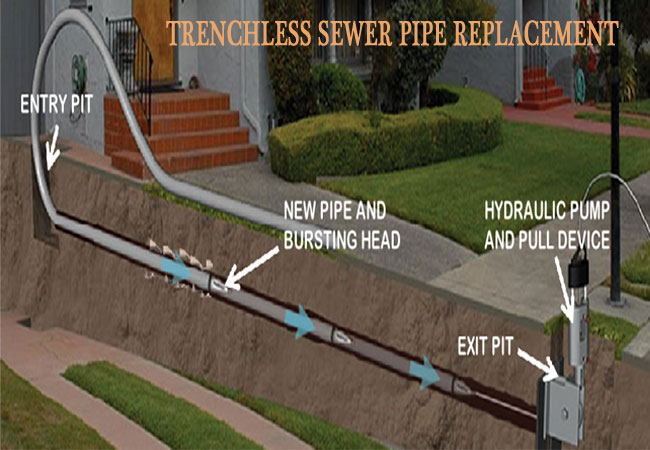
NASSCO describes pipe bursting as a widely used trenchless replacement method for underground utilities, including sewer lines. Plastic Pipe Institute guidance also describes pipe bursting as a method for replacing or upsizing existing pipelines while avoiding much of the extensive excavation associated with conventional replacement.
The important word is replacement. Pipe bursting is not simply cleaning the old sewer or coating its interior. The old line is displaced while a new pipe is installed along the route.
Signs a Sewer Line May Need Trenchless Replacement
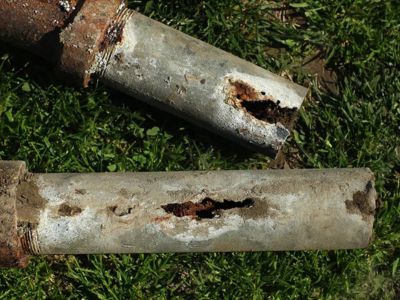
A slow sink by itself does not prove the main sewer is failing. Trenchless replacement becomes relevant when symptoms point to a deeper sewer problem and inspection shows structural damage ordinary cleaning will not solve.
EPA notes that sanitary sewer overflows can result from blockages, line breaks and other sewer defects, and that backups can cause property damage and public-health concerns. The cause still needs to be identified before replacement is selected.
When Is Pipe Bursting a Good Fit?
A trenchless method should be chosen because the pipe and site support it—not simply because digging is undesirable.
Workable Existing Route
The replacement generally follows the existing alignment, so the route must be suitable for the bursting system and new pipe.
Accessible Entry & Exit Points
Equipment needs workable access for insertion, pulling, connections and any required pits.
Compatible Pipe & Site Conditions
Pipe material, old repairs, soil, utilities, depth, structures and ground movement all affect feasibility.
Actual Structural Failure
A removable blockage should not be turned into a replacement project when cleaning is the appropriate solution.
Acceptable Grade
Pipe bursting follows the route. A major belly or slope problem may need excavation to correct elevation.
Connections Can Be Restored
Branches, cleanouts and connection points still have to be addressed even with reduced excavation.
How Does Pipe Bursting Replace a Sewer?
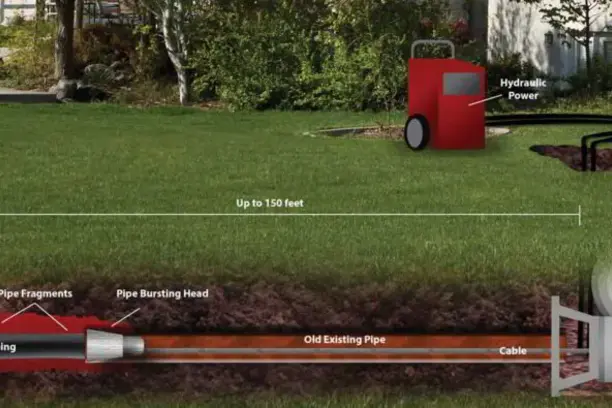
The basic concept is consistent: a bursting tool travels through the existing sewer, breaking or splitting the old pipe while a new replacement pipe follows behind it.
NASSCO describes the old pipe as being broken by brittle fracture or splitting using an internally applied mechanical force. Plastic Pipe Institute guidance notes that polyethylene pipe is widely used in bursting applications because long sections can be fused and pulled through the replacement path.
This reduces continuous surface excavation but still requires planning for utilities, access, soil behavior, dimensions, pulling forces and final connections.
Trenchless Is Not “No-Dig”
Entry and exit access, branch connections and some site conditions can still require excavation. The accurate benefit is reduced excavation compared with a full open trench when the project qualifies.
What Sewer Problems Can Trenchless Replacement Solve?
Trenchless replacement does not automatically correct every sewer problem. Major route changes, severe bellies, improper slope, difficult utility conflicts or other site constraints can make open excavation the better repair.
Trenchless Replacement vs. Traditional Excavation
Trenchless Replacement
Best considered when the existing route can be reused, access points can be created, surrounding utilities and soil are manageable, and the pipe can be replaced without correcting a major grade problem.
The main advantage is reducing continuous excavation through landscaping, hardscape and other surface improvements.
Traditional Excavation
Can be better when the sewer must be rerouted, slope needs correction, connections need direct access, severe misalignment exists or trenchless equipment cannot be used safely.
Open excavation also gives direct access to the failed pipe when the condition requires it.
What Is the Difference Between Pipe Bursting and Sewer Lining?
Lining depends on the host pipe being suitable for rehabilitation. Pipe bursting displaces the old pipe and installs a replacement pipe along the route. A sewer that is badly collapsed, significantly misaligned, poorly graded or inaccessible may not be a good candidate for either approach without excavation.
What Happens During Trenchless Sewer Replacement?
Inspect & Locate
Review the backup history, camera-inspect the accessible sewer and locate the route and visible defects.
Check Eligibility
Evaluate material, alignment, depth, access, utilities, connections, grade and soil conditions.
Install New Pipe
Create required access points, set up the bursting system and install the replacement pipe through the route.
Reconnect & Test
Complete connections and inspections, verify flow and restore access areas according to the project scope.
Why a Sewer Camera Should Come Before a Trenchless Quote
The value of a camera is identifying the location and type of visible defect so the replacement method can be evaluated against the actual sewer.
Inspection can reveal root intrusion, offsets, cracking, standing water, collapsed sections, previous repairs and obstructions. Locating the line connects that footage to depth, route, hardscape, structures and site access.
A camera does not answer every construction question. Utility locating, measurements and sometimes additional investigation are needed before a final trenchless plan is approved.
Questions the Evaluation Should Answer
Find Trenchless Sewer Replacement Service by City
Looking for a city-specific trenchless sewer replacement, pipe-bursting, or sewer camera evaluation page? Use the service-area directory below to find the appropriate local page.
Trenchless Sewer Replacement FAQs
What is trenchless sewer replacement?
It installs a new underground sewer with less continuous excavation than traditional open-trench replacement. Pipe bursting is one common replacement method.
Does trenchless sewer replacement require digging?
Yes. Some digging is usually required for access points, connections or other project needs. Trenchless means reduced excavation, not necessarily zero excavation.
Do I need a sewer camera inspection first?
A camera inspection is an important first step because it helps document visible pipe condition and locate defects before a replacement method is selected.
What is pipe bursting?
Pipe bursting breaks or splits the existing underground pipe while a new replacement pipe is pulled into place.
What is the difference between pipe bursting and pipe lining?
Pipe bursting replaces the old sewer with new pipe. Lining rehabilitates an existing pipe by installing a liner inside the old host pipe.
Can trenchless replacement fix root intrusion?
It can address root intrusion caused by failed joints or cracks when the damaged sewer is replaced with a suitable new pipe and the line qualifies.
Can a collapsed sewer be replaced trenchlessly?
Sometimes. The degree of collapse, alignment, access and ability to pass the bursting equipment through the route all matter.
When is traditional excavation better?
Excavation can be better when the route must change, grade problems need correction, connections need direct access, severe misalignment exists or trenchless equipment cannot be used safely.
Can pipe bursting increase sewer pipe size?
Sometimes. Feasibility depends on the old pipe, soil, utilities, allowable ground movement, connection requirements and project design.
How do I know whether my sewer qualifies?
Start with a sewer camera and site evaluation. Consider the defect, material, alignment, grade, depth, utilities, access points, structures and connections.
Is Trenchless Sewer Replacement Right for Your Property?
Call Alliance United Plumber to schedule a sewer camera inspection and trenchless eligibility evaluation. The goal is to confirm what failed, determine whether pipe bursting or another reduced-excavation method fits the site, and compare it with conventional replacement before major sewer work begins.