

Tankless Water Heater Installation & Repair
Alliance United Plumber provides tankless water heater installation, repair, replacement, troubleshooting, descaling, and maintenance. If your unit is showing an error code, producing inconsistent hot water, shutting down, losing flow, or no longer keeping up with demand, the service should begin with a tankless-specific diagnosis.
For new installations and tank-to-tankless conversions, the system should be sized around the property's actual hot-water demand and the installation conditions—not simply chosen by brand or maximum BTU rating.
Open 24 hours as stated on the current site. Service timing depends on technician availability, location, traffic, access, and the tankless water heater problem.
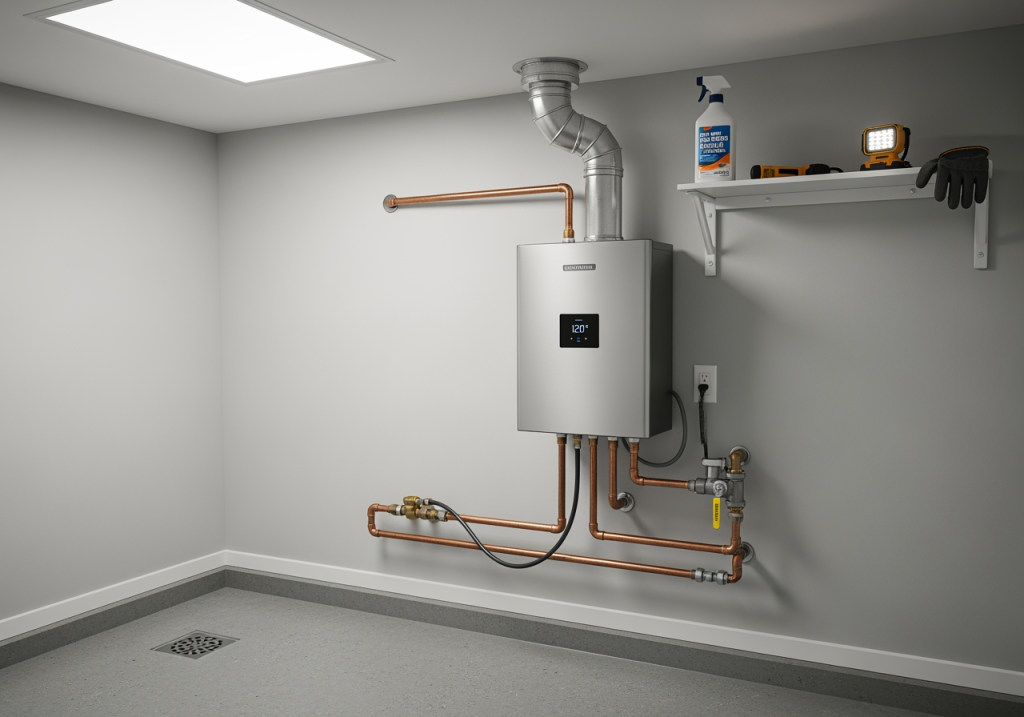
What Does Tankless Water Heater Service Include?
Tankless water heaters heat water as it flows through the unit rather than storing a large reservoir of heated water. That makes flow and sizing especially important. A unit can be operating normally and still disappoint the customer if simultaneous showers, sinks, dishwashers, or other fixtures demand more hot water than the equipment can deliver at the required temperature rise.
Repair diagnosis is equally specific. Loss of hot water can involve ignition, flame sensing, a dirty inlet filter, mineral scale in the heat exchanger, venting, gas supply, electrical power, flow sensing, temperature controls, valves, or another model-specific component. Replacing parts before identifying the cause can miss the real problem.
Signs Your Tankless Water Heater Needs Repair
Tankless problems often appear as inconsistent operation rather than a completely dead appliance. The pattern of symptoms helps narrow down whether the cause is water flow, mineral scale, ignition, fuel supply, controls, venting, or the equipment itself.
An error code is useful, but it is not always a complete diagnosis. Codes differ by manufacturer and model, and the same code can sometimes be triggered by several installation or operating conditions.
Should You Repair or Replace a Tankless Water Heater?
The better option depends on the failed component, overall condition, repair history, sizing, parts availability, and whether the unit still fits the property's hot-water demand.
Repair May Make Sense When
The unit is correctly sized and otherwise in good condition, while the problem is a serviceable sensor, igniter, filter, valve, control, connection, maintenance issue, or scale buildup. Repair also makes sense when normal performance returns after the actual defect is corrected.
Replacement May Make Sense When
The unit has repeated failures, a major component is compromised, parts are difficult to obtain, the installation requires substantial correction, or the heater is too small for the property's current simultaneous hot-water demand. Remodels, added bathrooms, or ADUs can also change sizing needs.
What Is Required to Install a Tankless Water Heater ?
A tankless installation must be matched to the property and the selected equipment. For gas-fired systems, that can include evaluating gas-pipe capacity, venting, combustion requirements, electrical power for controls, condensate drainage on applicable condensing models, water connections, service clearances, and mounting location.
building department guidance states that a plumbing permit is required for complete tankless water heater installation and that the gas and water-distribution systems serving the heater must be sized according to the applicable plumbing code. local building department also requires approved/listed equipment.
That makes a tank-to-tankless conversion more than an appliance swap. An existing tank location, gas line, or vent cannot automatically be assumed to meet the new unit's requirements.
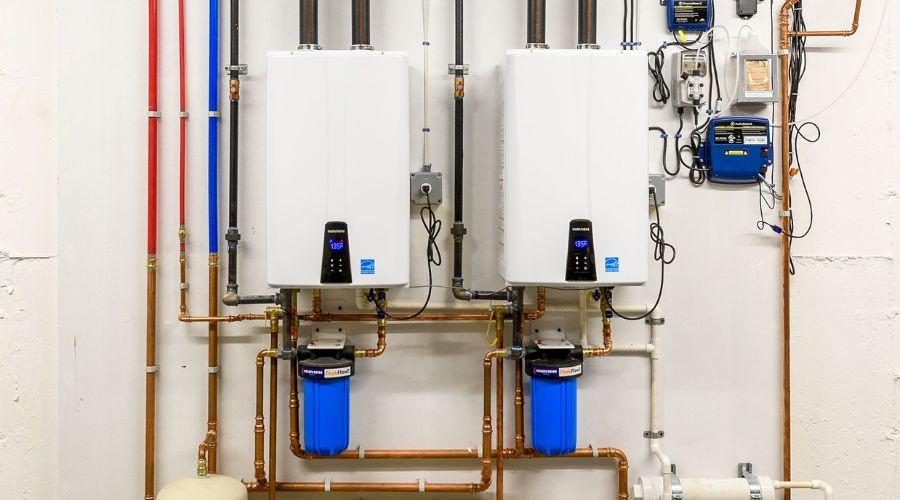
How Do You Size a Tankless Water Heater?
Tankless sizing is based mainly on simultaneous flow rate and the temperature rise the heater must produce.
Count Simultaneous Demand
Consider showers, sinks, dishwashers, washing machines, and other hot-water fixtures that can operate at the same time—not just household size.
Calculate Temperature Rise
The colder the incoming water and the hotter the desired outlet temperature, the more work the heater must do. Rated flow changes with temperature rise.
Verify Utility Capacity
Gas units require an adequate fuel system and approved venting. Electric tankless models can require substantial electrical capacity depending on the equipment.
U.S. Department of Energy Building America research emphasizes that tankless performance depends on installation and real-world use, not simply an equipment label. Correct sizing matters if the goal is stable hot-water delivery under actual demand.
What Safety Issues Matter With a Gas Tankless Water Heater?
Gas-fired tankless water heaters depend on safe fuel delivery, combustion, and venting. SoCalGas advises customers to have natural-gas appliances inspected regularly by a qualified professional or the utility as often as recommended, and it warns that unsafe appliance operation or venting can create carbon-monoxide risks.
Do not continue troubleshooting if you smell natural gas, hear gas escaping, see damaged fuel connections, or suspect carbon monoxide. Leave the area and contact SoCalGas or emergency services from a safe location before appliance repair is arranged.
Installation Details to Verify
Can a Conventional Water Heater Be Converted to Tankless?
The evaluation should include hot- and cold-water connections, gas supply or electrical service, venting, wall location, condensate drainage where applicable, service access, household flow requirements, and permit requirements. Tankless equipment changes how water is heated; it does not shorten the piping distance between the heater and a far-away fixture.
A properly sized tankless system can continue heating water while demand remains within its rated capacity, but “continuous hot water” does not mean unlimited flow. If simultaneous demand exceeds what the heater can produce at the needed temperature rise, performance can fall.
What Happens During Tankless Water Heater Installation?
Evaluate Hot-Water Demand
Identify fixtures likely to operate at the same time and determine required flow and temperature rise.
Inspect the Installation Site
Review gas or electrical supply, venting, water lines, condensate needs, wall location, clearances, and service access.
Install the Approved System
Mount and connect the selected equipment according to the manufacturer, applicable code requirements, and permitted scope.
Commission & Test
Check connections, operation, hot-water delivery, error conditions, and response under expected demand.
Find Tankless Water Heater Service by City
Looking for a city-specific tankless water heater installation, repair, replacement, or maintenance page? Browse the directory below to find the appropriate local service page.
Tankless Water Heater Installation & Repair FAQs
Why does my tankless water heater go cold during a shower?
Possible causes include mineral scale, restricted flow, a dirty filter, ignition or sensor problems, plumbing crossover, or a unit that cannot support the current combined hot-water demand.
Why is my tankless water heater showing an error code?
Error codes are model-specific and can point toward ignition, flame sensing, venting, flow, scale, temperature, gas supply, electrical, or control problems. The code should be used as part of diagnosis rather than as the diagnosis itself.
How often should a tankless water heater be descaled?
There is no universal interval. Follow the manufacturer and consider local mineral scale, usage, temperature settings, maintenance history, and any water-treatment system.
Can a tank water heater be replaced with tankless?
Yes, many properties can be evaluated for conversion. Gas or electrical capacity, venting, water connections, condensate handling, installation location, hot-water demand, and permits should be evaluated first.
How do I know what size tankless water heater I need?
Sizing is based primarily on simultaneous hot-water flow and temperature rise. The system should support the fixtures likely to run together at the desired outlet temperature.
Does a tankless water heater provide unlimited hot water?
A properly operating system can continue heating water while demand remains within its rated flow capacity. If simultaneous demand exceeds that capacity at the required temperature rise, performance can fall.
Does hard water affect tankless water heaters?
Yes. Minerals in hard water can form scale inside a tankless heat exchanger and reduce flow or heat-transfer performance over time. Maintenance should follow the manufacturer and actual water conditions rather than a fixed universal schedule.
Do I need a permit to install a tankless water heater?
Permit requirements depend on the jurisdiction and installation scope. New gas piping, electrical work, venting changes, relocation, or a full new installation may require permits and inspection. The applicable local building department should be checked before installation.
Are rebates available for tankless water heaters?
SoCalGas currently lists rebates for certain qualifying high-efficiency natural-gas tankless water heaters under specific program conditions. Check the current utility program before purchasing equipment.
How do I schedule tankless water heater repair?
Call Alliance United Plumber at (310) 362-9413 or use the Request a Tankless Quote button. Include the unit brand/model if known, any error code, the symptoms, and the service address.
Need Tankless Water Heater Installation or Repair ?
Call Alliance United Plumber for tankless-specific troubleshooting, error-code diagnosis, repair, descaling, replacement, new installation, or a tank-to-tankless conversion evaluation. The next step should be based on the actual unit, hot-water demand, installation conditions, and service address.